No fluff. No fads. Deep-dive investigative reports from the surgeon who actually sees the inside of the joints.
If you heard a pop on the court and someone asked if they stepped on your heel — no one did. The Achilles just snapped. The decisions you make in the next week will shape your next year.
Achilles tendon ruptures are classically middle-aged, classically acute, and classically preventable. The archetype: a 38-year-old male playing pickup basketball, calf felt "tight" all week, pushes off hard on a layup, hears the pop, cannot walk. What ruptured was a tendon that had already been degenerating quietly for a decade.
The Thompson test is the most important bedside exam in orthopedics: with the patient prone, squeeze the calf. If the foot plantarflexes, the Achilles is intact. If it doesn't, the Achilles is torn. A negative Thompson test plus an MRI is the standard workup. Ultrasound in the clinic is an underused alternative.
The Achilles is one of the only injuries where walking into the ER under your own power still gets you a near-complete tendon rupture. Pain is a poor guide here.
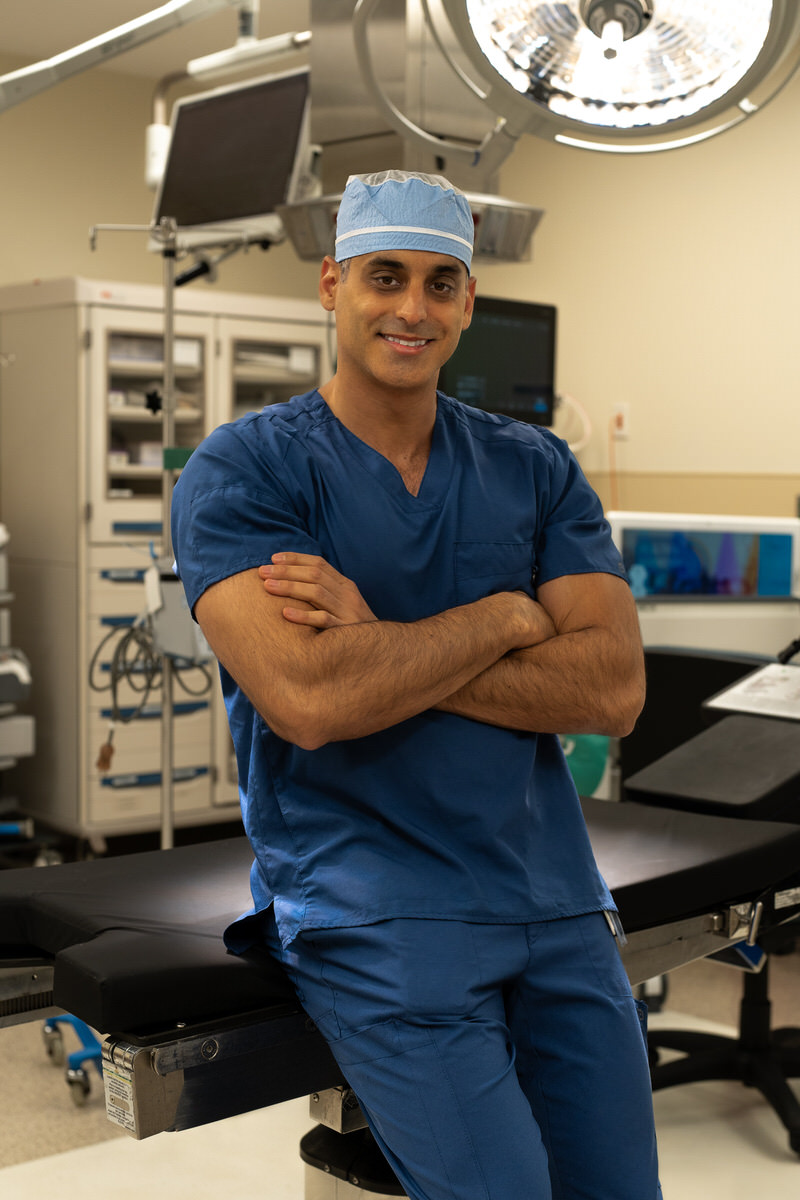
Dr. Sameh Elguizaoui, M.D. — Board-Certified Orthopedic SurgeonA decade ago, surgery was the default. Today, modern functional rehabilitation — with a hinged boot, early protected weight-bearing, and accelerated physical therapy — matches surgical re-rupture rates in most patients, without surgical risks.
Non-operative
Operative
Not every bad Achilles pops. Chronic tendinopathy — painful thickening 2–6 cm above the heel — is a different problem with a different treatment plan. Eccentric loading (Alfredson protocol) is the cornerstone. Shock-wave therapy, PRP, and selective surgical debridement are second-line options. Cortisone is contraindicated — it doubles rupture risk.
Acute Achilles pop this week? Book a same-week sports consultation — timing of boot and protocol start is a tendon-healing variable.The tendon degenerates silently starting in the 30s. Sudden push-off loads on an already-weakened tendon are the tipping point. Cortisone for other problems in the same leg raises risk. Fluoroquinolone antibiotics also double rupture risk — ask before taking them.
Eccentric heel drops, progressive calf loading, attention to ankle mobility, and avoiding fluoroquinolones when possible. Pre-habilitation is how we protect the contralateral tendon.
Most recreational athletes do. Elite athletes often return to within 90% of pre-injury push-off; the tendon is permanently slightly longer, which is the biomechanical reason the deficit exists.
Studies do not show meaningful benefit for acute rupture healing. For chronic tendinopathy, some evidence supports it. See our PRP deep dive.
Delayed presentation > 3 weeks, elite athletes needing fastest return, and ruptures with a large inter-tendon gap on ultrasound. Otherwise, a well-executed non-operative protocol is a legitimate first-line choice.
Get Started
Take the first step toward recovery. Schedule a consultation with Dr. Elguizaoui to discuss your condition and explore your treatment options.