No fluff. No fads. Deep-dive investigative reports from the surgeon who actually sees the inside of the joints.
If you are 28 and the MRI just said "full-thickness cartilage lesion," you are not destined for a knee replacement at 40. You are in the sweet spot for two of the most underused procedures in orthopedics.
Articular cartilage is the glossy white surface that caps the ends of bones inside every joint. Two millimeters thick in most places. Smoother than ice on ice. It is what lets your femur glide on your tibia 8,000 times a day without a single thought.
It has one problem: cartilage does not heal itself. Unlike skin, muscle, or bone, cartilage has no blood supply. When you tear a piece out — a bad landing, a twist on a curb, decades of compensation — the body has no delivery system to patch it. The defect sits there, edges fraying, until it spreads into early osteoarthritis.
The single best predictor of whether a 30-year-old ends up with a knee replacement at 50 is whether someone addressed their cartilage defect when it was still the size of a dime.
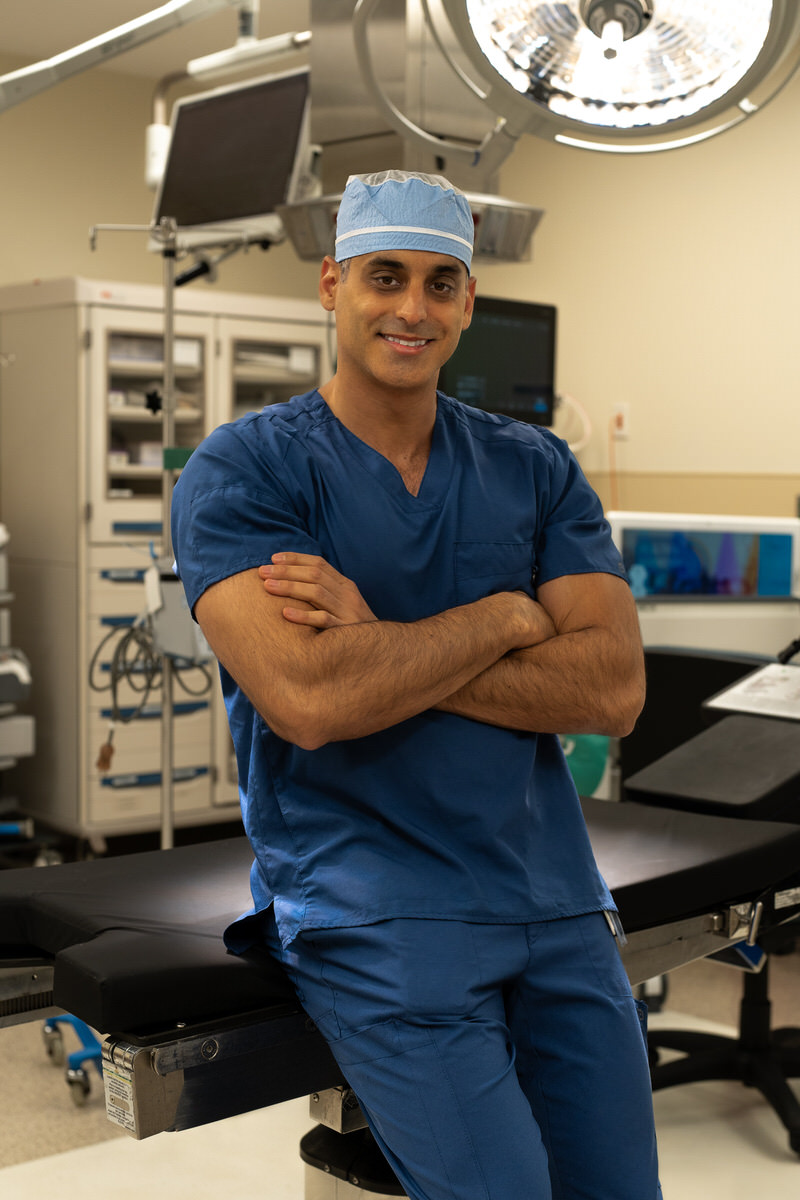
Dr. Sameh Elguizaoui, M.D. — Board-Certified Orthopedic Surgeon, Fellowship-Trained in Cartilage RestorationMACI stands for Matrix-Induced Autologous Chondrocyte Implantation. Translation: we take a few of your own cartilage cells, hand them to a lab that grows millions more on a postage-stamp-sized collagen patch, and then we fit the patch into your defect like a custom floor tile.
It is FDA-approved. It is the only cell-based cartilage procedure that is. And it is shockingly under-offered — most patients with symptomatic knee cartilage defects never hear the word "MACI" from their surgeon.
Arthroscopic biopsy takes a rice-grain-sized sample of your healthy cartilage from a low-load area of the knee. 20 minutes, two tiny incisions, outpatient.
Your chondrocytes are shipped to a Vericel lab in Cambridge, MA. Over ~4 weeks they are coaxed to multiply and then seeded onto a bioresorbable collagen scaffold.
A mini-open procedure trims the defect to clean edges, then cuts the membrane to match its exact shape and glues it in place with fibrin sealant. No screws, no metal.
Over 12 months, those cells mature into hyaline-like cartilage that bonds with your surrounding tissue. MRI at 18 months often shows near-normal cartilage signal.
Sometimes the defect is too big for MACI. Or the bone underneath the cartilage is dead (osteochondritis dissecans). Or you have already tried microfracture and it failed. For these cases, the answer is often an osteochondral allograft — a donor plug of cartilage with the bone still attached.
Think of it like a dental implant for your knee: a circular core of healthy cartilage and its underlying bone, harvested from a carefully matched young donor, press-fit into a precisely drilled socket in your femur.
Your MRI is used to order a fresh donor condyle sized to within 1mm of your anatomy. Tissue banks typically ship within 14 to 28 days.
A cylindrical coring tool drills the damaged cartilage and a few millimeters of bone down to healthy tissue, creating a clean socket.
The matched donor plug is seated flush with your joint surface using gentle press-fit — no hardware required. The bone block fuses to your own over 3 to 6 months.
Procedure A
Procedure B
Both procedures have the same non-negotiable truth: the graft has to be protected while it integrates. The timeline below is the gold standard we use in the practice — it is also why compliance with PT matters more than almost any other variable.
Biological age matters more than chronological age. A fit 58-year-old with good bone density and a single contained defect can be a great candidate. A sedentary 40-year-old with diffuse arthritis may not be.
In New York, most major insurers cover both procedures when medical necessity is documented — a failed course of conservative treatment, a full-thickness defect on MRI, and a matched anatomic profile. Our team handles pre-authorization in-house.
We fix them at the same time. Cartilage does not live in isolation — instability and meniscus deficiency accelerate cartilage failure. Expect a combined surgical plan. See also our ACL symptom guide and meniscus guide.
For very early cartilage damage, biologics can quiet symptoms. They do not rebuild a full-thickness defect. Read the full breakdown in our PRP deep dive.
A 30-minute consultation plus a weight-bearing X-ray and a high-resolution MRI will answer it. If you are in NYC, book a visit with Dr. Elguizaoui and bring your imaging.
Get Started
Take the first step toward recovery. Schedule a consultation with Dr. Elguizaoui to discuss your condition and explore your treatment options.