No fluff. No fads. Deep-dive investigative reports from the surgeon who actually sees the inside of the joints.
Most "breakthroughs" in orthopedic marketing emails are not breakthroughs. The four below are the ones that are quietly working — and one of them is changing what we offer in clinic this year.
FDA-cleared AI tools now read MRIs and X-rays alongside radiologists, flagging cartilage defects, occult fractures, and rotator cuff tears with measurable improvements in sensitivity. The tools do not replace radiology — they catch what tired humans miss on the 200th study of the day.
The first time an AI flag pointed to a 3-millimeter cartilage flake we had honestly missed in clinic, the conversation about "AI in medicine" stopped being theoretical for me.
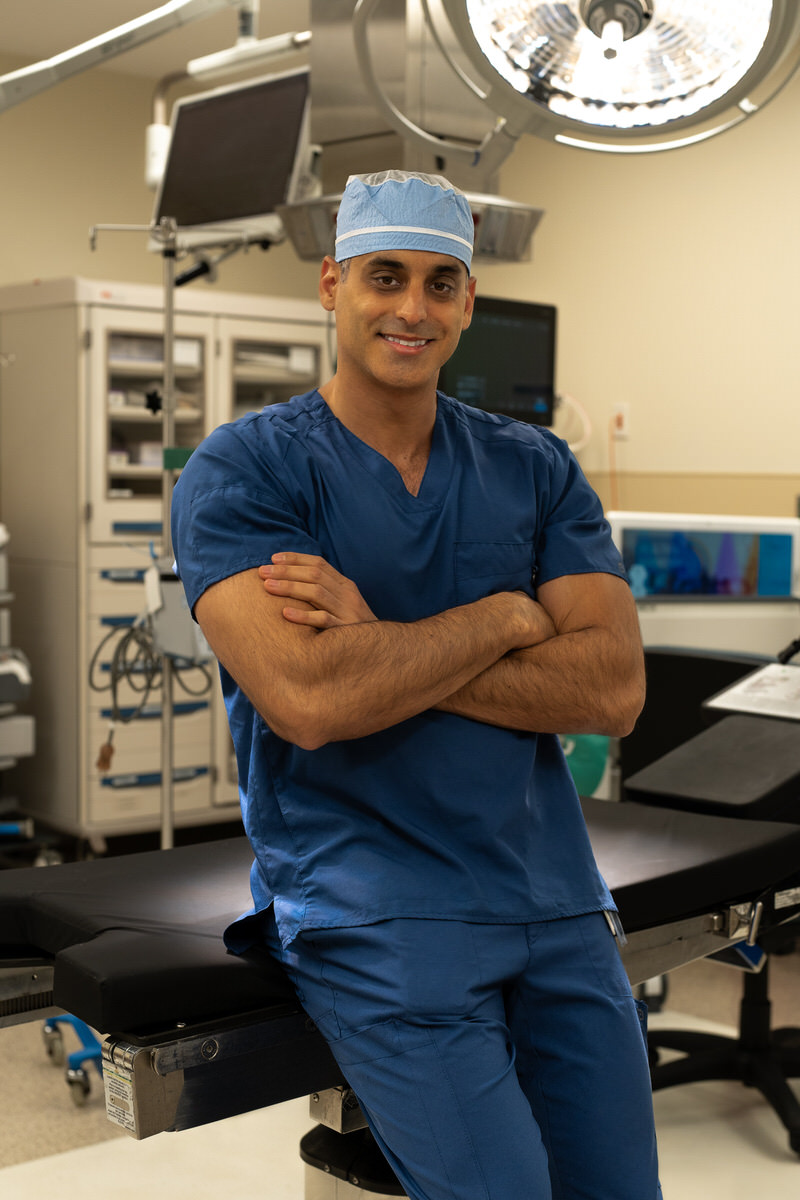
Dr. Sameh Elguizaoui, M.D. — Board-Certified Orthopedic SurgeonBioprinted cartilage is past proof-of-concept. Several lab groups have produced patient-specific cartilage scaffolds seeded with autologous chondrocytes that integrate in animal models. Human clinical trials are open at a handful of academic centers. The decade-out promise: a custom cartilage plug printed from your own cells that fits your defect to the millimeter.
For the cartilage techniques that are commercially available today, see our cartilage restoration deep dive.
Continuous range-of-motion sensors, smart braces, and ML-analyzed gait apps now generate the data we used to collect at 6-week PT visits. The right wearable in the right rehabilitation pathway means earlier identification of stalled recovery — and fewer in-person visits for the patient.
AR headsets now project pre-operative CT plans onto the surgical field in real time. The clearest current use case: pedicle screw placement in spine and complex pelvic fracture fixation. For shoulder and knee replacement, AR is racing robotics — both are precision tools, both are improving outcomes for the surgeons trained on them.
Curious which 2026 technologies actually fit your case? Book a consultation for an honest assessment of what works — and what is still marketing.FDA-cleared smart knee replacements that transmit step counts, range, and step asymmetry to the surgeon now exist. Early data suggest they accelerate identification of stiffness — useful, not yet routine.
No. The marketing is loud, the evidence remains thin. Read our stem cell investigation for the unfiltered status.
No more than power tools replaced carpenters. Robotics raises the precision floor; surgeons still make every clinical decision and handle every complication.
Almost never. The cost of a year of joint damage usually outweighs the speculative benefit of a not-yet-proven technique. The right operation today wins over the wrong wait.
For complex segmental bone defects, 3D-printed titanium scaffolds are FDA-cleared and used today. For cartilage, fully biologic printing is still in early clinical trials.
Get Started
Take the first step toward recovery. Schedule a consultation with Dr. Elguizaoui to discuss your condition and explore your treatment options.